Persistant Stare


The general formula we are dealing with here is: everything you wanted to know but were afraid to ask – with the implication: because you already knew it but did not really want to know it, so that you preferred to act as if you are still in search of it. In contrast to positive sciences where we are always in search of the final result and cannot ever be sure that we’ve reached it, a properly dialectical approach turns the relationship between searching and finding around: we pretend to search for something because we do not want to admit that we’ve already found it. - Goads
Iran’s Foreign Ministry says that in response to the EU labeling part of the Islamic Revolutionary Guard Corps a terrorist entity, Tehran has designated all EU member states’ military forces as terrorist organizations, citing its 1998 countermeasures law. - Dropsite
When you ask, “Why are the peptides Chinese?” people will say, “They’re beating us at everything right now. I would love to have American peptides, but we just don’t have the ecosystem. We don’t have the talent. Our labor’s too expensive. We don’t have the manufacturing network effects. It’s all over there.” There’s definitely a China envy angle to it…A lot of people are proud of it. When I’d ask, “Aren’t you worried about the risks?” they’d say, “Not really. I know it’s risky, but I’m a risk-taker. I’m starting companies, I’m doing all sorts of other risky stuff. Anything for an edge — if there’s an upside I might be able to get, I’m going to try anything to get it.” - Chinatalk
Top Russian University Offers a Program in Sanctions Evasion
To be successful across the competition continuum, the Army must develop and deploy a rapidly scalable force of human sensors capable of operating in competitive environments, both permissive and semi-permissive, and interact directly with local populations to collect critical information. Local commanders cannot rely exclusively on information collected by separate intelligence agencies or through technical means alone. Direct human contact with civilian and military populations remains essential (despite common regressive attitudes about the superiority of overhead and technical capability), requiring adequately skilled collectors who can operate effectively at lower echelons. The modern HUMINT collector must be trained to execute a diverse array of missions across the operational spectrum, serving as the critical interface between military forces and the human terrain. Prior to the degradation of their mission, their responsibilities included debriefing friendly forces, liaison with foreign counterparts, conducting target analysis to identify high-value individuals, detainee interrogations, and, critically, managing low and mid-tier human sources. During the Iraq and Afghan wars, HUMINT collectors were often attached to maneuver elements, performing field interrogations and key leader engagements while on patrol. Outside active combat zones in permissive countries, collectors served as key liaisons to local populations. These core competencies were also significantly more effective when enhanced with appropriate language skills, which enabled direct communication and deeper cultural understanding…HUMINT collection at scale can create its own sort of “persistent stare” directly into the collective consciousness of a given social network. This is what sets Army HUMINT apart from specialized, high-level collectors who spend years developing individual sources in the hopes of extracting some exquisite intelligence coup…In irregular warfare environments where competition exists below the threshold of declared war, contests take place over populations rather than key terrain, and victory belongs not to whoever possesses superior firepower, but to whoever better understands and influences the population. - Small Wars Journal
"Austerity keeps us disciplined. Without social control, there would be no wealth accumulation." - Clara Mattei
In place of understanding, what Lacan says we do find at the heart of a psychosis is a core that he describes as “inaccessible, inert, and stagnant with respect to any dialectic” (p.22). In spite of the way that a delusion changes over time, there remains a core belief or conviction that is not susceptible to any argumentation, inert to reasoning or probing as to its truth and which remains as a keystone in the subject’s life. It might be a delusional refrain that constantly repeated throughout his life, which whether communicated or remains private, is “closed to all dialectical composition” (p.22). We might think, for example, of the singleness of purpose displayed by some people we meet, perhaps a repeated preoccupation with a single goal or idea, which constantly reappears in their speech and appears to order their life in such a way that we might wonder of what function this element has in their ‘psychical economy’. Lacan takes as an example litigious delusion, in which “Litigation moves into the foreground so much that sometimes it seems completely to dominate his interest in what is at stake. Here also the dialectic comes to a halt” (p.22). - LacanOnline
More than 1,000 councilors across England have pledged their support for Palestinian rights ahead of the crucial local elections in May, as campaigners aim to make Palestine a central electoral issue. - AA

NORD STREAM: The damaged pipes have lain on the bottom of the Baltic Sea since September 2022. Nord Stream is technically severely affected, but politically it is far from finished. While Berlin and Brussels publicly emphasize that their dependence on Russian pipeline gas has been overcome, numerous indications suggest that the pipeline continues to play a significant role in informal discussions. Sources report backroom diplomacy, unofficial channels, and a scenario in which Washington could bring precisely the Russian gas it has sought to prevent for years back to Europe. But under one crucial condition: American control…The Americans’ goal could be not just to sell LNG or prevent a Russian-European rapprochement, but to expand control over the energy infrastructure – wherever possible, including on the old continent… - BZ
According to a new study by Ipsos, Canada is the top country expected to have a positive influence on world affairs.
During the Cold War, the United States actively used chemical and biological agents against agriculture and the people of Cuba. The facts considered allow us to draw conclusions about the nature of the methods that the CIA used to organize and conduct biosabotage: such operations were planned «in the long run» and had large-scale goals – for example, to eliminate sugar production on the island or cause famine; highly contagious pathogens of human and animal diseases were used for biological sabotage; artificially caused outbreaks of epidemics and epizootics were disguised as natural ones; representatives of the local opposition, as well as mercenaries, were involved in the implementation of sabotage; to infect farm animals, vaccines contaminated with virulent strains directly at biofactories, as well as contaminated feed were used. - Journal of Protection Corps
WASHINGTON, Feb 22 (Reuters) - A new U.S.-military-led task force specializing in intelligence collection on drug cartels played a role in the Mexican military raid on Sunday that killed the Mexican drug lord known as ‘El Mencho,’ a U.S. defense official told Reuters.
INTELLECTUAL PROPERTY PARADOXES: For agricultural products, steel, and other commodity-like goods with no intellectual property protection, competitive forces put powerful pressure on profits. If the entire economy were like those industries, a severe crisis would engulf it. In particular, those industries that depended on intellectual property would tend to be especially vulnerable. Reproduction costs for software, pharmaceuticals, or movies are trivial. In the language of economics, marginal costs are small and fixed costs are high. Without the legal protection of intellectual property rights, strong competition in such industries would mean certain bankruptcy. Consequently, monopoly in these sectors is essential, and monopoly is made possible by intellectual property rights protection…The obscene wealth of a Bill Gates of Microsoft, a Phil Knight of Nike, and all of the other instant Internet billionaires, alongside the sizable residue of poverty that blights the contemporary United States, reminds us of the link between the distribution of income and intellectual property…intellectual property rights are terribly destructive of productivity on many counts. First of all, intellectual property rights undermine the very science and technology that they are supposed to promote. Intellectual property rights are to science what tollbooths are to highway traffic. Both create bottlenecks and impede forward progress, but in the case of intellectual property rights, innumerable disputes arise about who gets to collect the tolls and how much the tolls should be. To the extent that the present system of intellectual property rights constricts the flow of new technologies, it imposes another incalculable cost on society..For example, virtually no new technology is the product of a single person or even a single corporation. - Perelman
South African video game allows players to conduct heists on Western museums
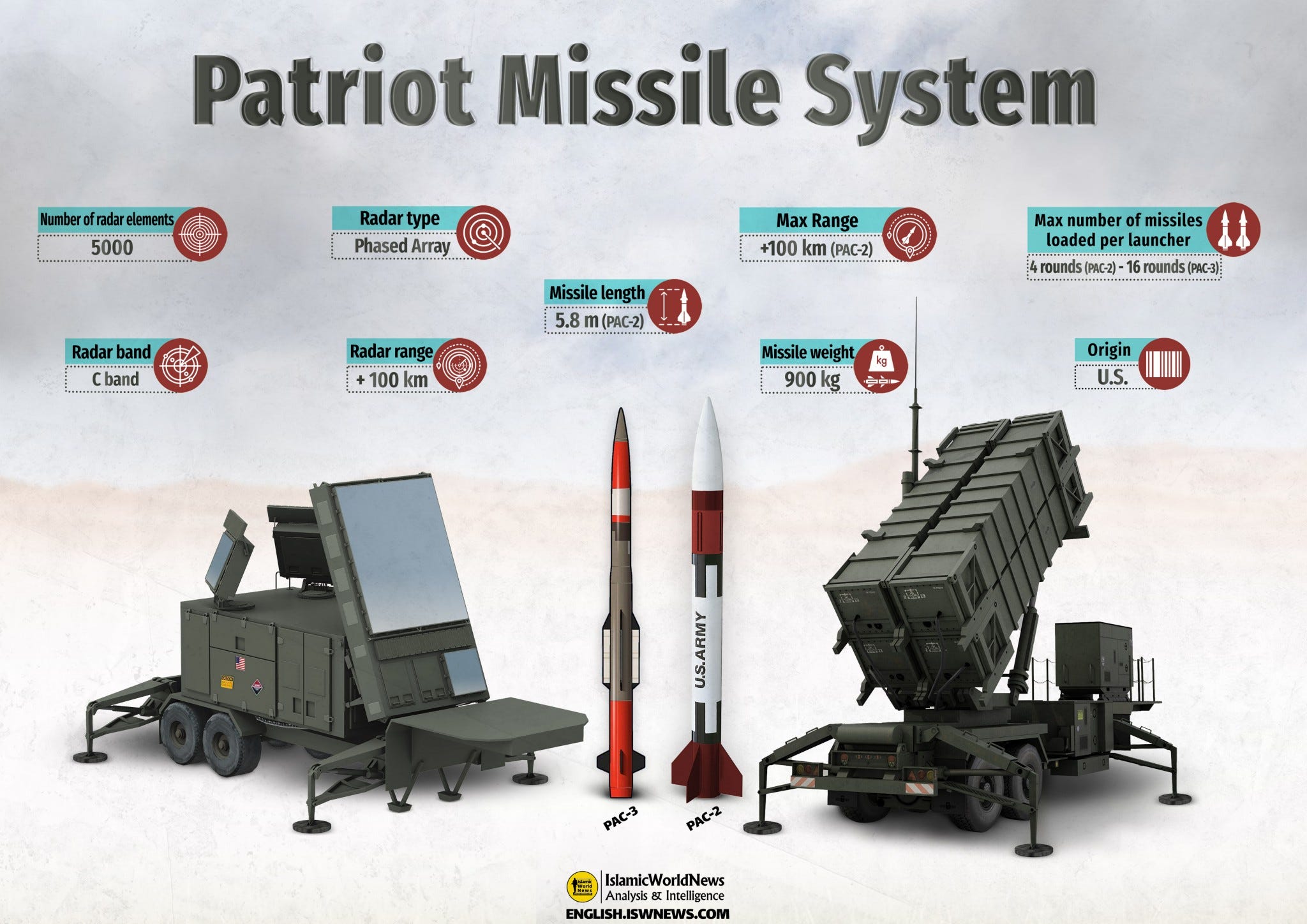
Zelensky on Ukraine Winning the War: The latest item on his list is permission to manufacture American weapons under licence, including Patriot air defence missiles. “Today the issue is air defence. This is the most difficult problem. Unfortunately, our partners still do not grant licenses for us to produce systems ourselves, for example, Patriot systems, or even missiles for the systems we already have. So far, we have not achieved success in this. BBC REPORTER: “Why won’t they do that?” ZELENSKY: “I don’t know. I have no answer.” - BBC